

In 2024 SFS started a pilot project focusing on riverside restoration and proper waste management in the village of Moamoa-fou. Funded by the European Union, the three organizations, Sosaiete Fa’asao o Samoa (SFS), the Samoa Recycling and Waste Management Association (SRWMA) and the Samoa Women’s Association of Growers (SWAG) formed a partnership to address the waste issue, the environmental issue and the sustainable livelihood issue in Moamoa-fou.
Moamoa CA Officially Launched
22 April 2026
Launch of the Moamoa-Fou Conservation Area
Building resilience through faith, culture, community and conservation
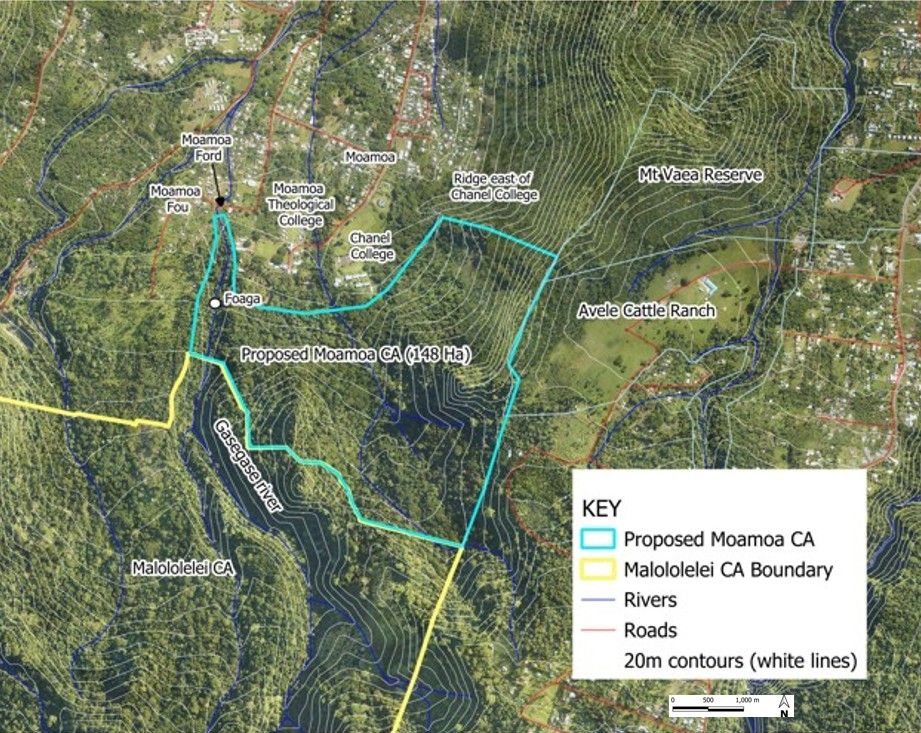
On April 14 under the dappled sunlight of the Moamoa-Fou forest, on the outskirts of Apia, Samoa, a gathering of church leaders, government officials, development partners and local families marked more than just a ribbon-cutting. They were witnessing the official birth of the Moamoa-Fou Conservation Area, a 148-hectare conservation and agroforestry sanctuary that represents the intersection of environmental stewardship, conservation and community members working together towards a shared vision.
A Legacy of Stewardship
The heart of this new conservation area is a generous gift from the Catholic Church. Under the leadership of His Grace Archbishop Mosese Vitolio Tui, 148 hectares were set aside to protect the region’s biodiversity and the vital Gasegase watershed, which serves as a primary water source for the greater Apia urban area. Archbishop Tui reminded those gathered that the initiative is a fulfillment of a divine mandate. “When God gave us the land, we were called to protect it, not to destroy it,” he stated, echoing the sentiments of Pope Francis’s 2015 Laudato Si’declaration – which states that environmental, social, economic and cultural crisis is interconnected. The Archbishop emphasized that the environmental crisis cannot be separated from human issues, framing the community as “caretakers of God’s creation.”
Roots of Resilience
The Moamoa-Fou community’s journey to this moment began two decades ago. Following their relocation from urban Apia, these families have spent 20 years rebuilding their connection to the land. Families, youth, women’s groups, church members and local leaders have come together to restore ecosystems, strengthen sustainable land‑management practices and support livelihood opportunities.
This grassroots effort is bolstered by international and local partnerships. Supported by Live and Learn Environmental Education (LLEE) Samoa and the Sosaiete Fa’asao Samoa (SFS), the project is part of the New Zealand-funded Climate Resilient Islands (CRI) Programme. Jonathaon Lee of the New Zealand High Commission highlighted the area as “critical natural infrastructure for climate defence,” linking forest health directly to flood protection and water security for the entire region. The new conservation area is connected to the larger Malololelei Conservation Area, which is also supported by the New Zealand government through a Kiwa Initiative implemented by Sosiete Fa’asao o Samoa.
A Model for the Nation
The Moamoa-Fou Conservation Area is contributing Samoa’s broader environmental goals. Lealaisalanoa Frances Brown Reupena, CEO of the Ministry of Natural Resources and Environment (MNRE), noting that this site is contributing to the government aims to establish 20 new conservation areas across the country by 2030. She acknowledged the support of the Catholic Church and praised the community-led model demonstrated at Moamoa-Fou, stating, “Unless there is willingness in our communities to conserve and protect our lands, there is nothing government can do.”
Afi’a James Atherton, founder and former President of Sosaiete Fa’asao Samoa, highlighted the wider impact of the initiative, stating: “The creation of the Moamoa‑Fou Conservation Area strengthens climate resilience not only for Moamoa‑Fou, but also for villages downstream by protecting vital ecosystems and water sources.” Chairman of the Live and Learn Environmental Education Samoa Advisory Board, Pouli Dr Keneti Faulalo, expressed gratitude to the Government of New Zealand for funding the extension and establishment of this conservation area through the Climate Resilient Islands Partnership Training Programme. The launch presented practical tools developed through this programme and others: A Sustainable Agriculture for Conservation Communities Manual funded by the European Union’s “Our Future is Now” project, and a comprehensive community resilience profile funded by the Climate Resilient Islands programme.
Where Culture Meets Nature
The launch also celebrated the vital role of the Moamoa-fou community, who have provided labour for tree planting, waste management and day-to-day maintenance of the conservation area. The Moamoa-fou Future Society is a group formed in 2025 to ensure project sustainability. This group already secured additional funding from the UNDP Small Grants Program to build a greenhouse for propagating trees to restore riverbanks and to support households with kitchen vegetable gardening. Together with the village council, komiti a tina and youth groups, the Moamoa-fou Future Society’s in-kind contribution of $1,500 assisted SFS and LLEE in planning the launch
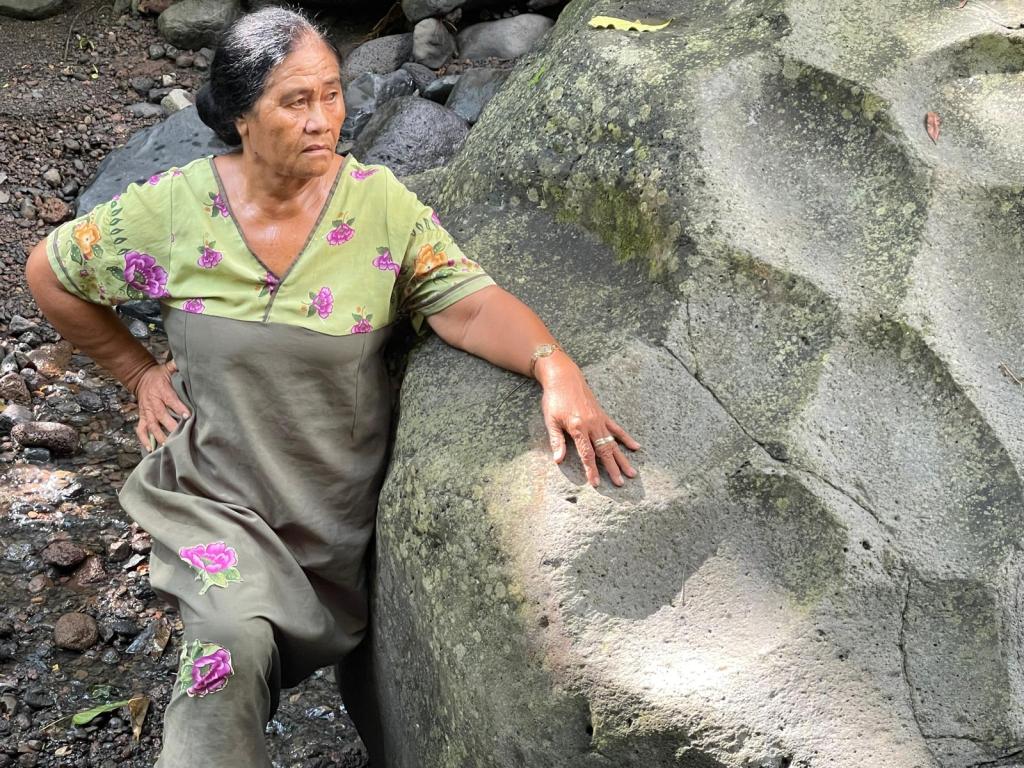
The day’s celebrations concluded with a journey into the heart of the forest. Guests followed a nature trail through agroforestry plots and riverbank restoration zones, eventually reaching the Foaga. This ancient stone grindstone, featuring 21 carved faces, is a unique cultural monument that has sat within the landscape for centuries.
As participants felt the cool forest breeze at the historic site, the message was clear: in Moamoa-Fou, the protection of nature is inseparable from the preservation of culture. This conservation area is not just a line on a map, but a living testament to a community’s commitment to their land, their faith, and the generations yet to come.
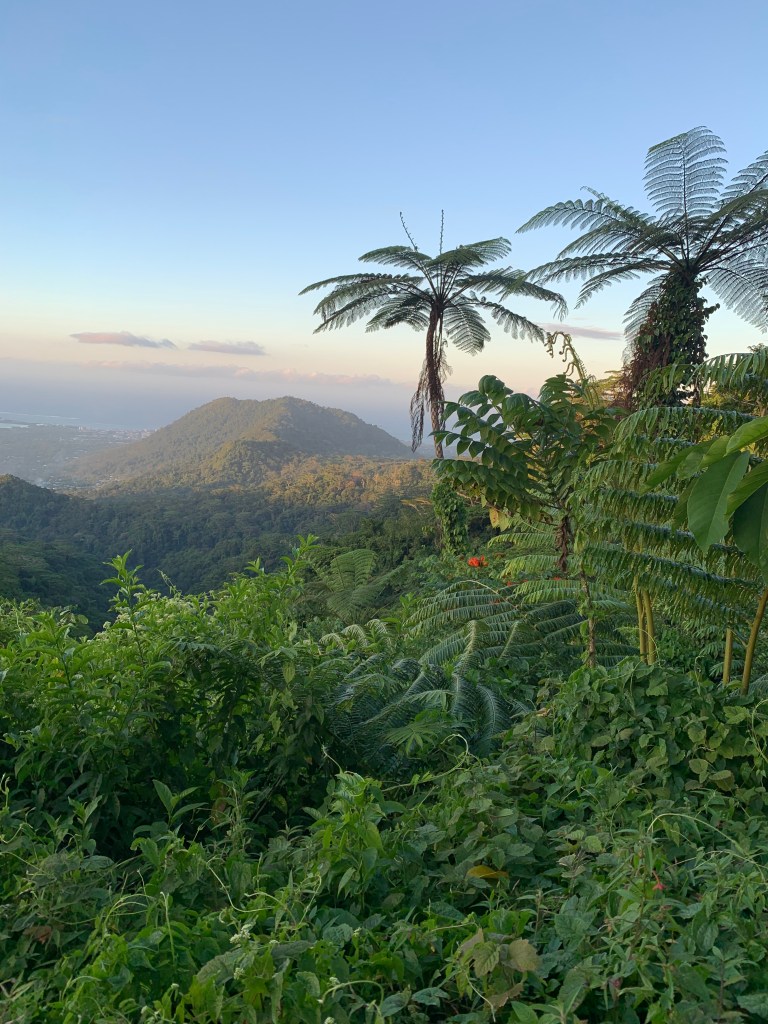
Stunning view from the Malololelei CA overlooking where Mt. Vaea Reserve Meets Moamoa CA
This ancient Foaga played a vital role in shaping Samaon Society. It was used by ancestors to craft stone tools and sharpened stone adzes before metal tools were introduced.
 samoaconservationsociety.com