

Mt Vaea Digital Nature Trail
Panel 4. Robert Louis Stevenson and the Legend of Vaea and Apaula
Robert Louis Stevenson
(13 November 1850 – 3 December 1894)
Robert Louis Stevenson, the famous Scottish author of numerous short stories, plays, poems and novels including “Treasure Island”, “The Strange Case of Dr Jekyll and Mr Hyde” and “Kidnapped”, is better known in Samoa as Tusitala “Story teller”. Perhaps the best known early traveller to explore Samoa, he arrived at Apia in 1889 and given his failing health, decided that Samoa would be a good place to live and ended up spending the last five years of his life here. Today he lies buried here on Mt. Vaea overlooking the home he built at Vailima, now a museum and a venue for weddings and official events of the Government of Samoa and the diplomatic community.
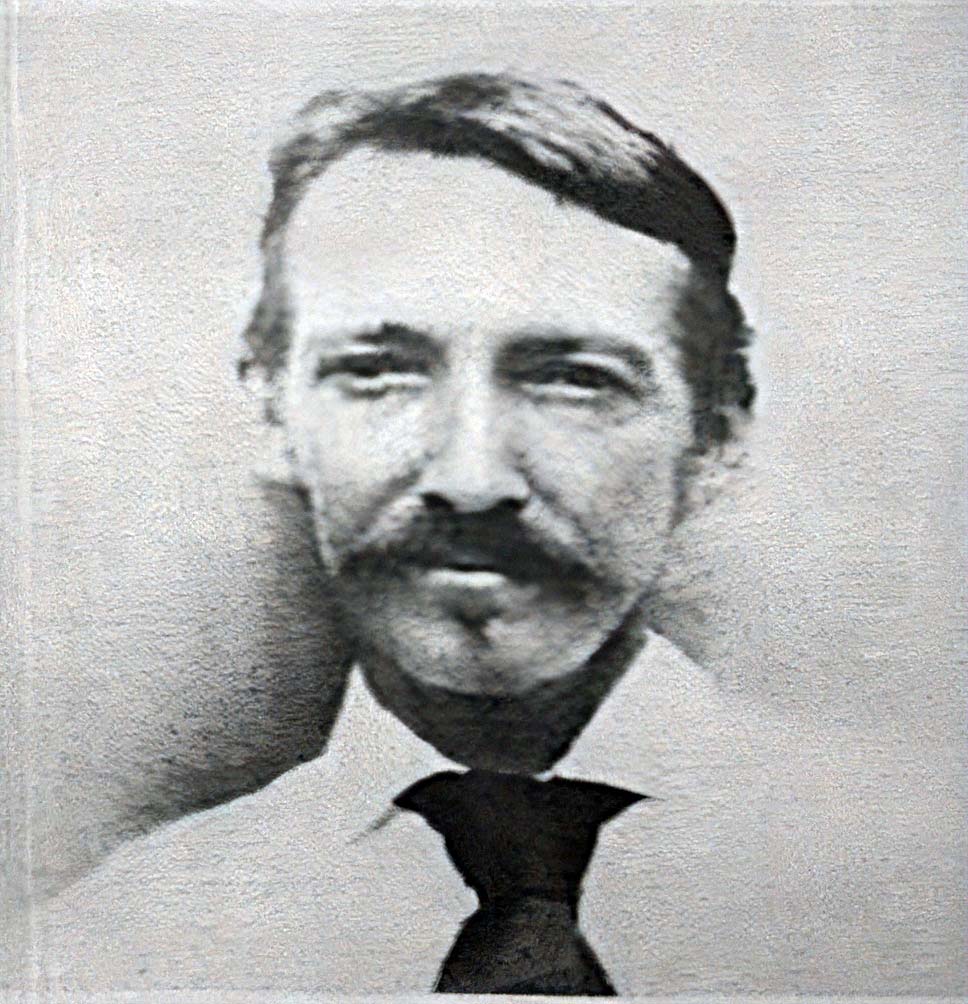
Stevenson was not only a famous writer but he was also a great humanitarian who tried to prevent wars and cared for the wounded. Immersing himself in Samoan culture, Stevenson disagreed with the rival powers of Britain, Germany and the United States whose warships were common sights in Samoan harbours at that time. Stevenson understood that, as in the Scottish Highlands, an indigenous society was unprepared for the arrival of foreigners who played upon its existing rivalries and divisions. As the external pressures upon Samoan society grew, tensions soon descended into several inter-district wars that he documented in the book “A Footnote to History: Eight Years of Trouble in Samoa”.
According to the Index Translationum, UNESCO’s database of book translations, Stevenson is ranked the 26th-most-translated author in the world, ahead of Oscar Wilde and Edgar Allan Poe.
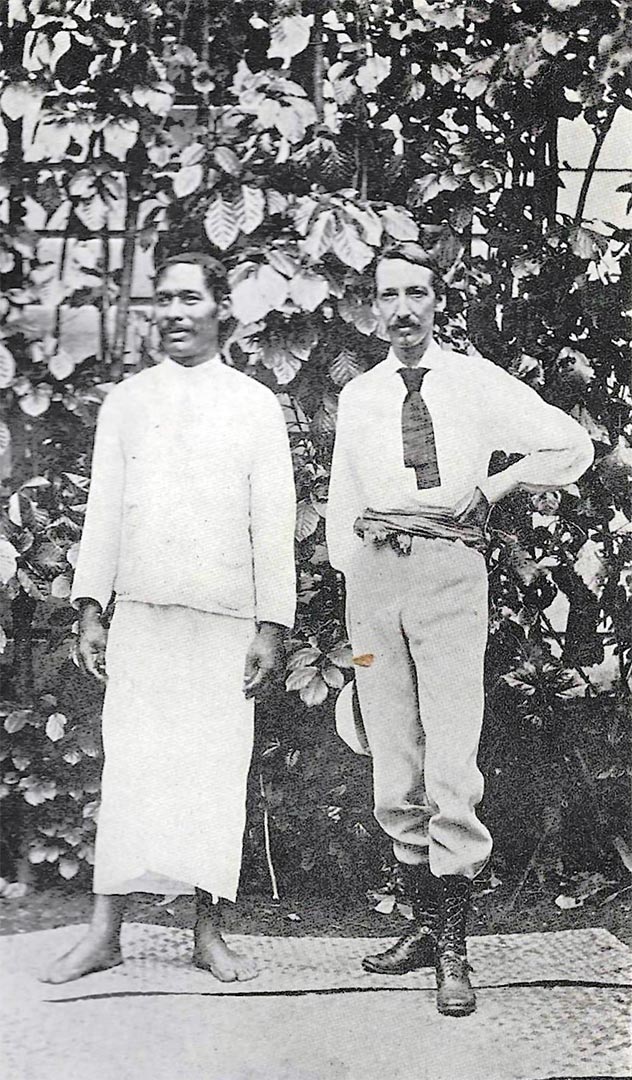
For more information on Robert Louis Stevenson, please visit the museum at the base of the mountain.
The Legend of Vaea and Apaula
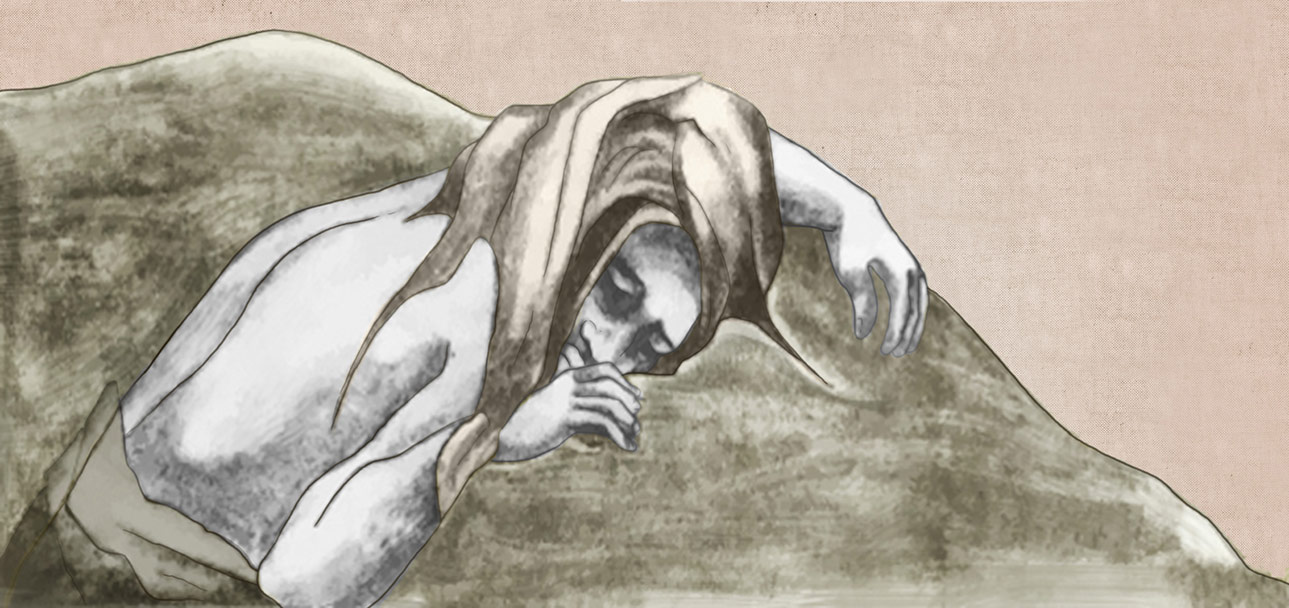
There are many versions of the legend of the giant Vaea who became Mt Vaea and his wife Apaula, whom the stream “Loimata o Apaula” at the base of Mt Vaea is named after. Here is the story from the Samoan Mythology website, developed by the Kneubuhl family who have kindly given us permission to use the story and the illustrations. This story is told by Chief Seumanutafa at the request of Sooa’e as she sailed away from Saleaumua in Atua, en route to Leulumoega. Illustrations are by Dorothy Kneubuhl.
“Vaea was a giant who lived behind our village in Apia harbor. One day he insulted the Tuifiti (King of Fiji). The enraged king sent his four sons with the order to kill the giant, but their ship was so large that it could not enter the harbor, instead they anchored just beyond the harbor.
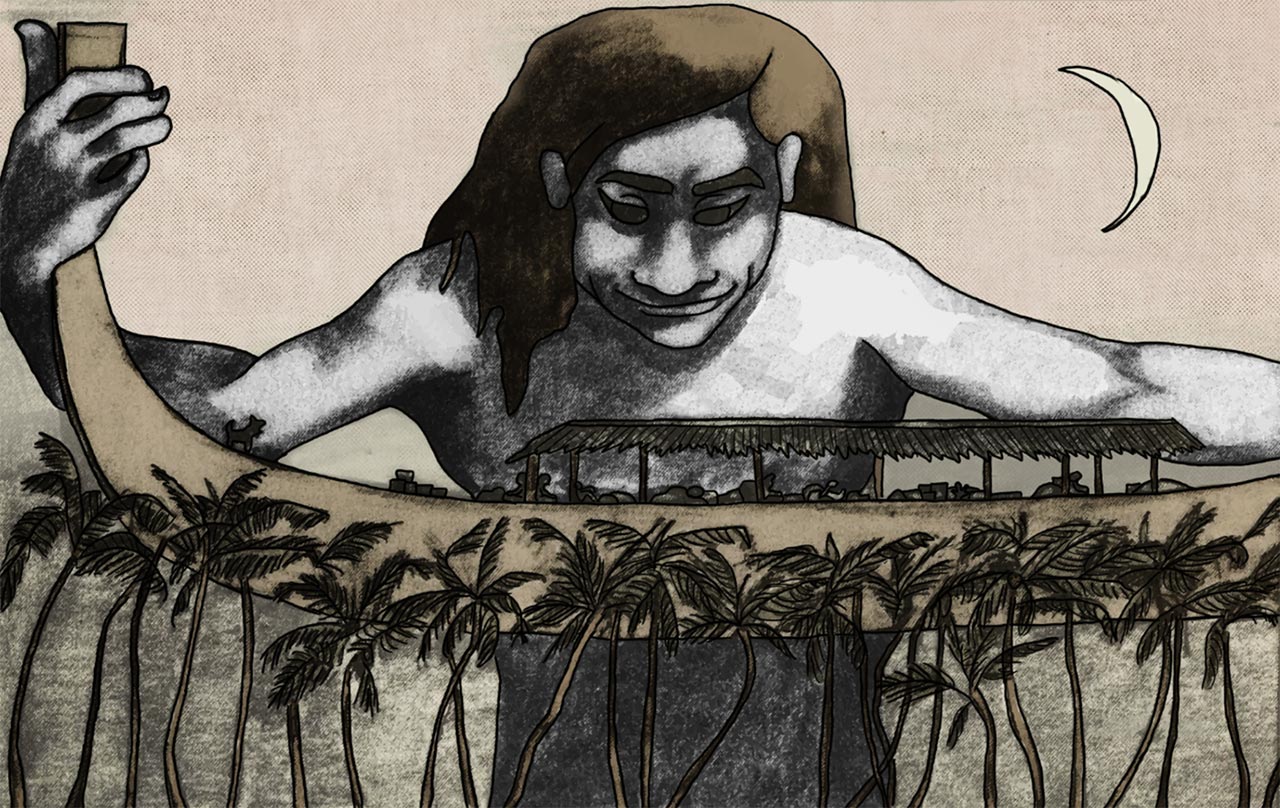
When Vaea heard of the arrival of the Fijians, he surmised that they had come to avenge the Tuifiti. This did not disturb him. He calmly walked down to the bay, lifted the boat out of the sea and placed it on the tops of the trees growing near the shore.
In the morning the Fijians discovered their precarious position. Such an amazing feat could only be performed by Vaea, for their boat was 500 fathoms long! To appease the giant, the brothers offered him their sister Apaula who had accompanied them as a ransom. When Vaea saw the pretty girl he accepted, but told the brothers to leave immediately.
The brothers fled in haste, leaving their sister Apaula with Vaea, glad their lives were spared. Apaula quickly became resigned to her fate. Soon she became pregnant and returned to Fiji to await the birth. When she left, Vaea the giant stood on a stone in Savalalo, looking after the fast disappearing ship.
All went well for a while, but the ship’s progress was delayed by adverse winds. Long before they reached their destination Apaula gave birth to a boy, and in remembrance of her last view of her husband she called the child Tuisavalalo (standing in Savalalo).
Fiji was reached at last. Fearing that her vengeful brothers would kill and eat her son, Apaula left him in hiding near the shore where she managed to visit him daily.
Tuisavalalo grew up and became so strong that he could pull out big trees as if they were weeds. One day, however, he was discovered by his uncles, and that was the end of the poor boy. He was quickly dispatched and prepared for the oven.
The distraught Apaula thereupon returned to Apia to ask Vaea to avenge her murdered son. Alas, she had delayed her return too long. Grieving over the absence of his wife, Vaea had turned into stone. Only his head was still alive. It spoke and said, “Ua sau Apaula, ua tautua,” Apaula has come, but too late.
Then, hearing what had happened in Fiji, Vaea ordered his wife to go to Savai’i where she would find his brother Va’atausili. His brother would avenge them.
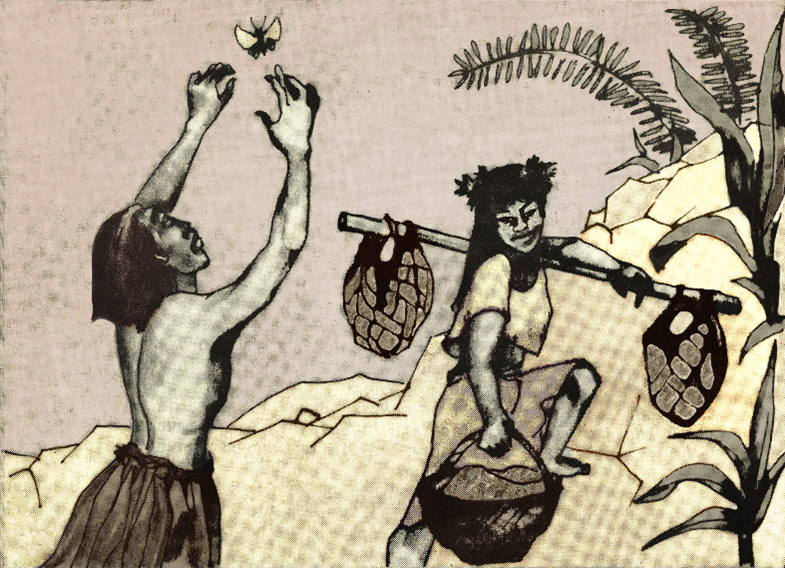
Apaula did as she was told. In Lealatele (Savai’i) she fell in with a puny young man who amused himself catching butterflies. Upon Apaula’s asking him if he knew Va’atausili, he replied that he himself was the man. This the girl could not believe, so she continued her search with the young man following her.
Near Falealupo they entered a cave to spend the night. There, a wonderful thing happened. The girl’s weakly companion suddenly changed into a handsome young giant bearing a marked resemblance to her husband Vaea.
From this incident, the Samoans derive the proverb: “Ua Moea’itino Va’atausili.” A nights rest gave strength to Va’atausili (upu taofiofi).
The cave, becoming too small for the fast growing giant, burst asunder. Greatly astonished the girl cried out, “Ua atoa le tino o Va’atausili.” His body is full grown, now he can do it.
They immediately travelled to Fiji, and there, armed with a coconut tree, Va’atausili slew the four cannibal brothers. Vaea was avenged, but he himself had meanwhile turned into the mountain, which even today bears his name.”
Legend has it that Apaula’s tears of sorrow created the stream “Loimata o Apaula”, that you crossed at the bottom of Mt Vaea to get here.

 samoaconservationsociety.com