

Mt Vaea Digital Nature Trail
Panel 3. Lowland Rainforest

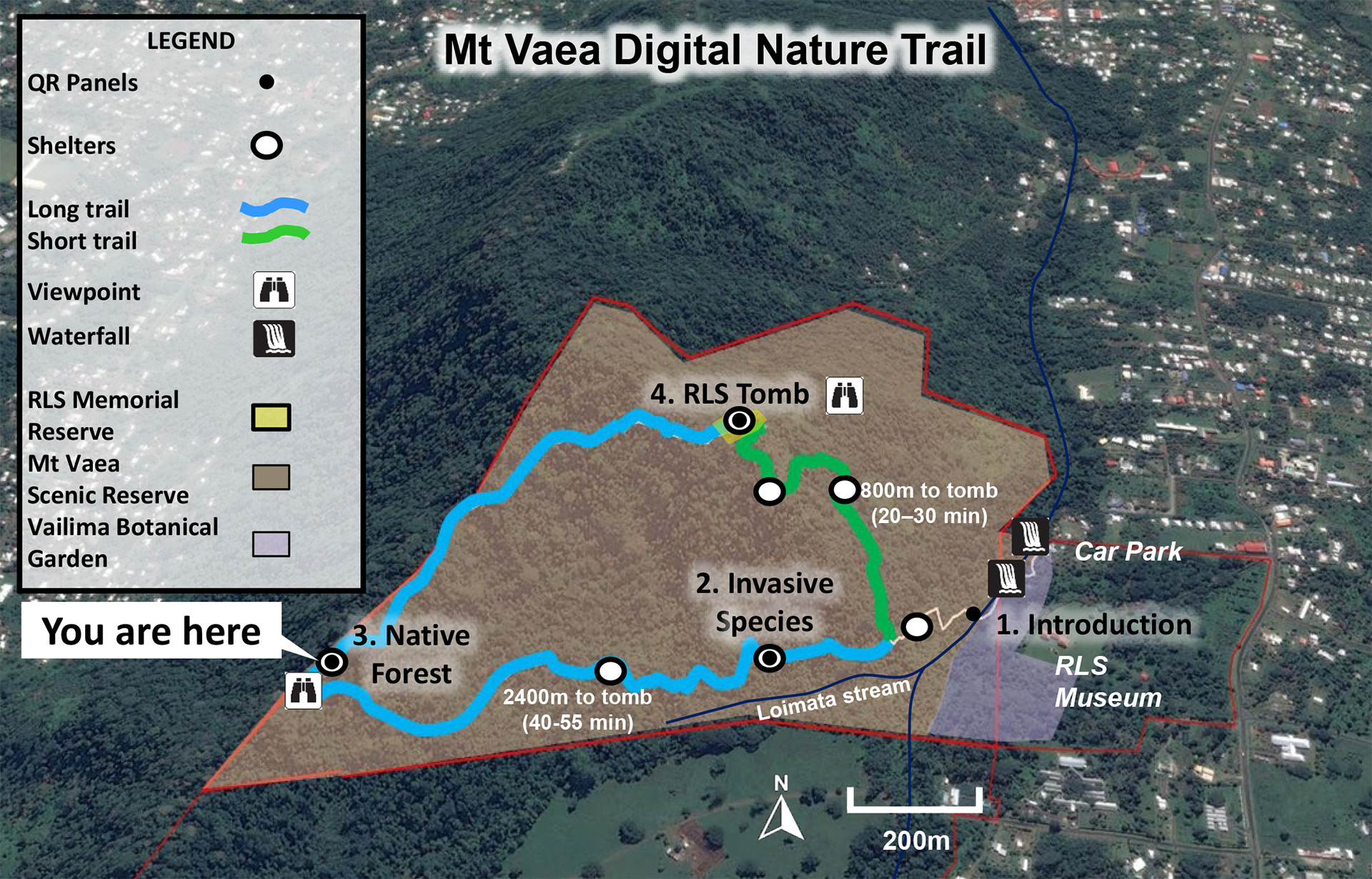
This is the third of four digital information panels along the Mt Vaea trail- two on the short trail and two on the long trail. Digital tree identification labels have also been placed on many of the prominent trees.
Lowland Rainforest
At one time Samoa was almost completely clothed with rainforests that stretched from the shores to the mountain summits. However, almost half of the rainforests in Samoa have now been cleared for human settlement or for agriculture. The lowland rainforests (below 600m elevation) have been particularly badly impacted and only small stands remain: mainly on areas too rocky or too steep for development or agriculture, such as here on the steep portions of Mt Vaea. These remaining patches of native lowland forest are critical for native biodiversity as habitats and food sources for birds, flying foxes, reptiles, insects, snails and other biota. Native trees can also generally withstand strong winds and heavy rain better than invasive species, and therefore boost the resilience of our rainforests to climate change and natural disasters.
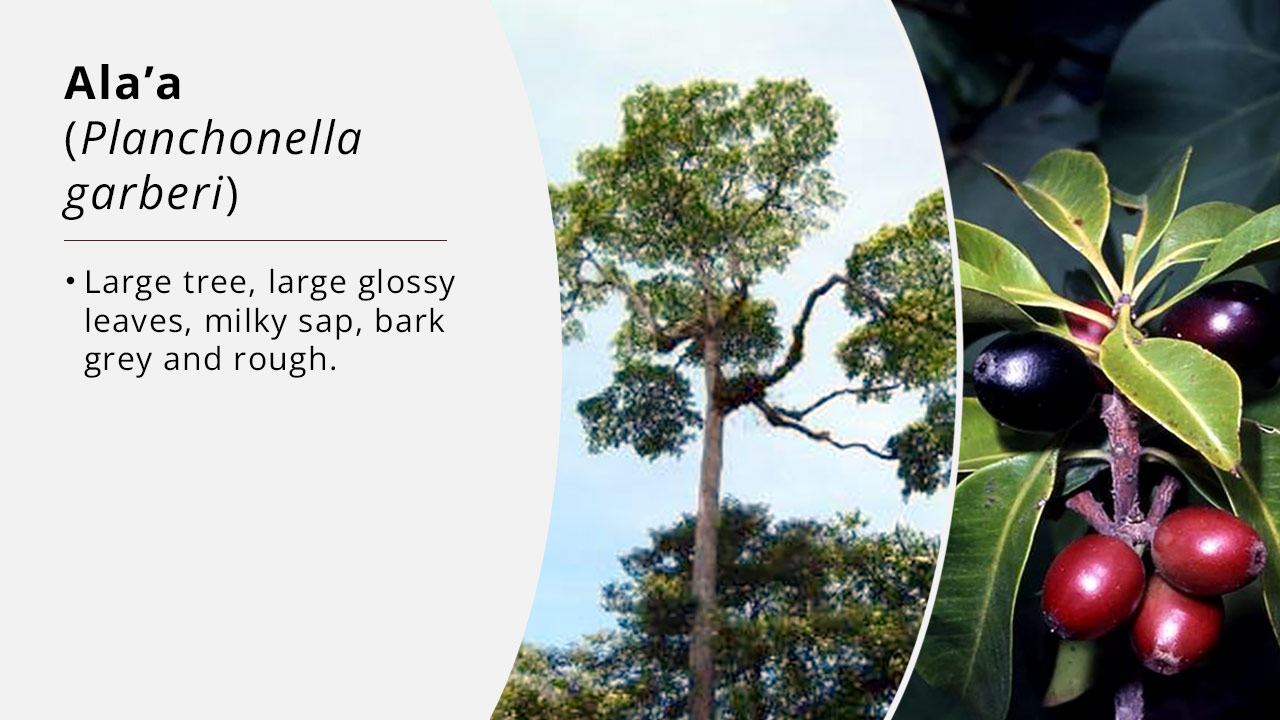
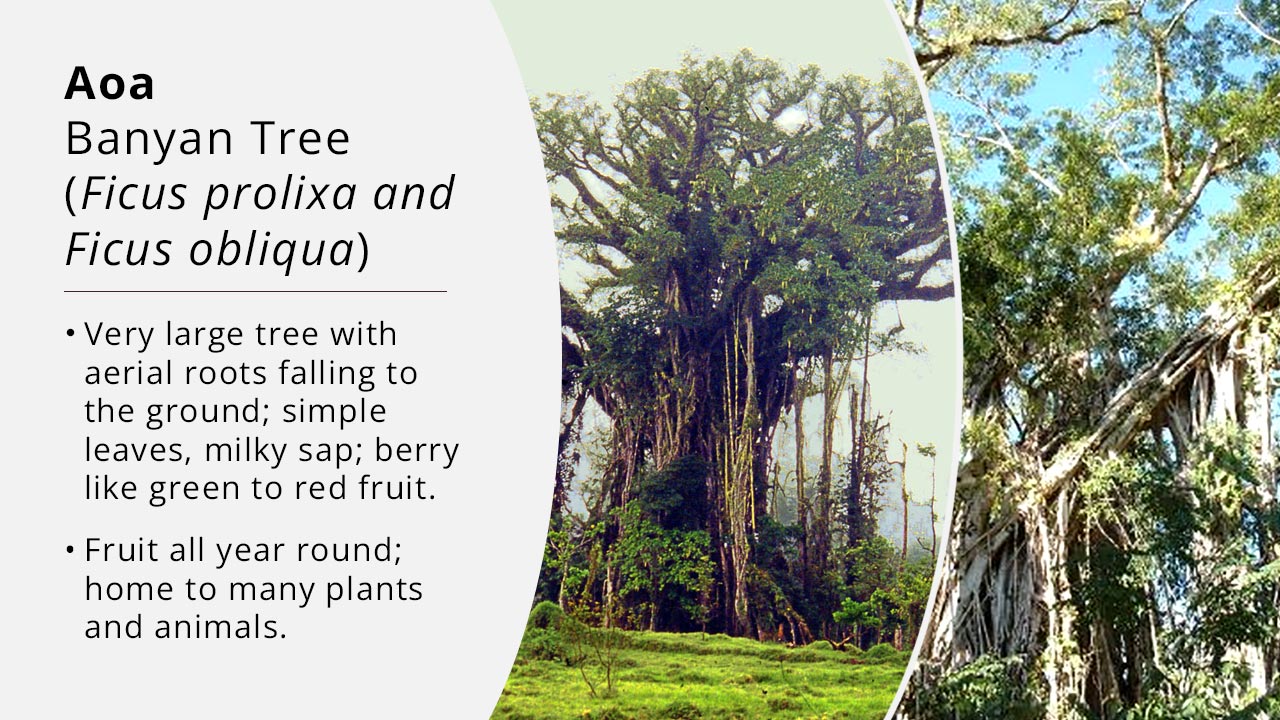
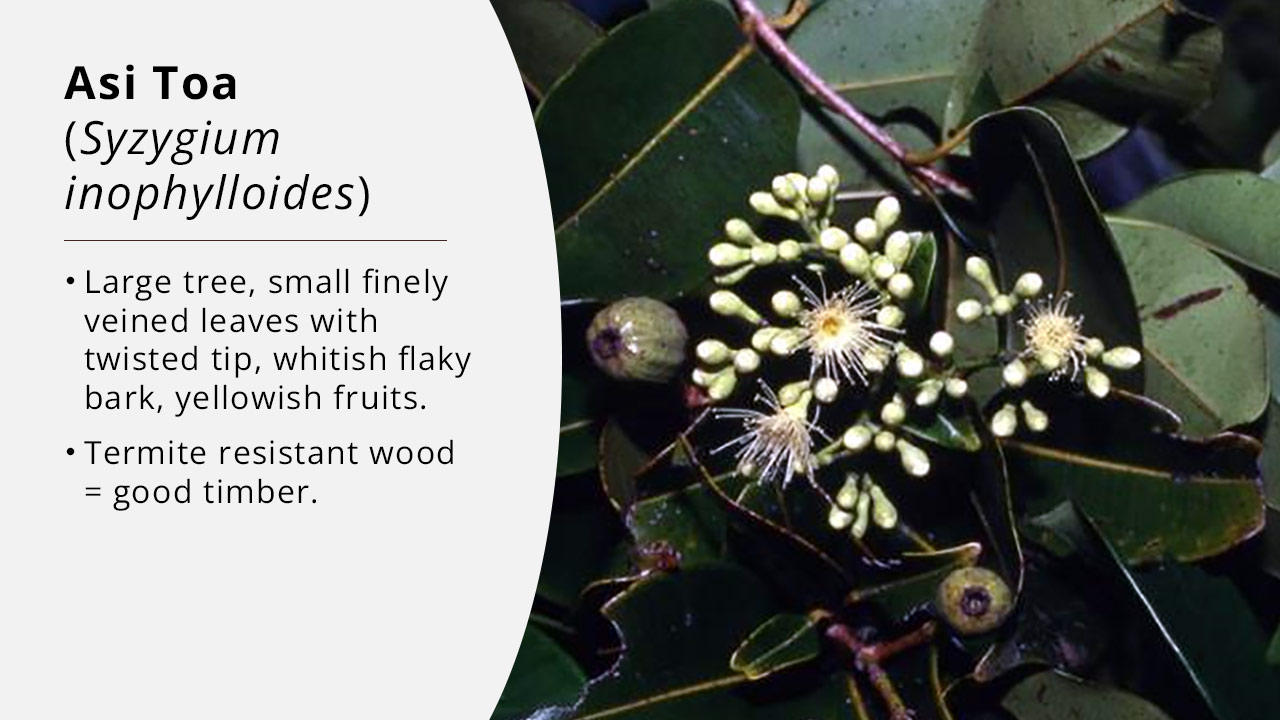
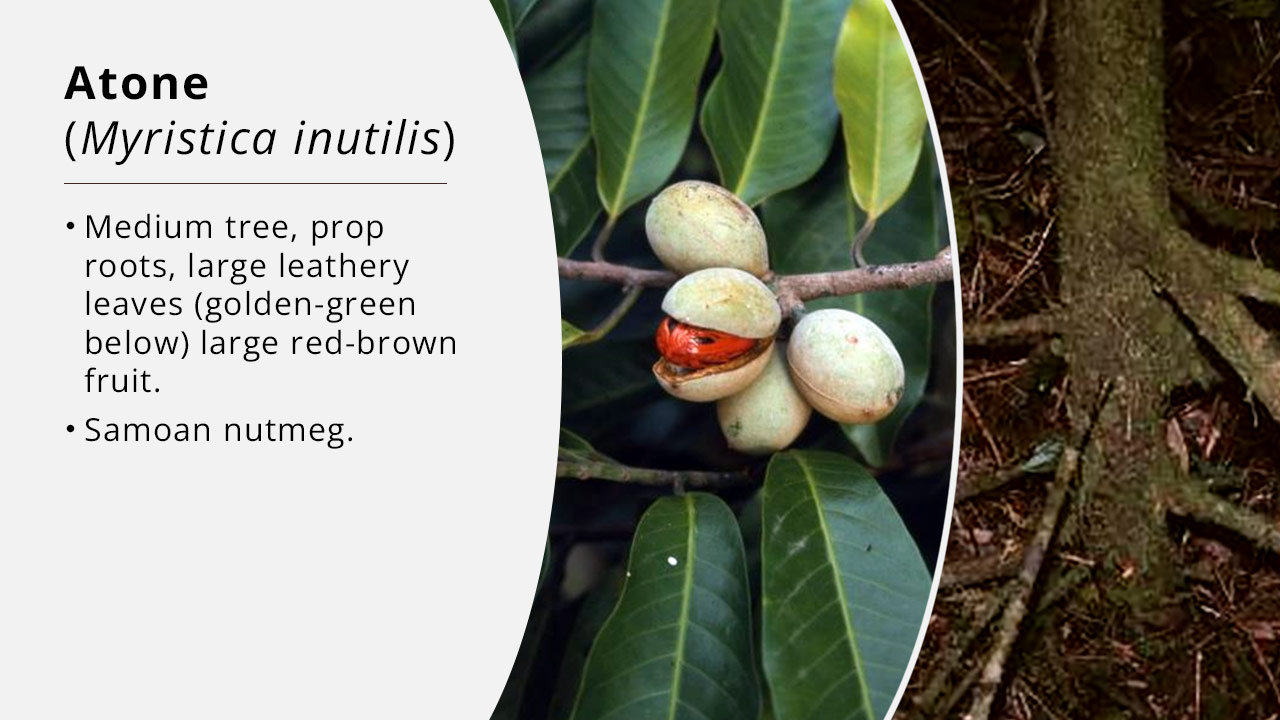
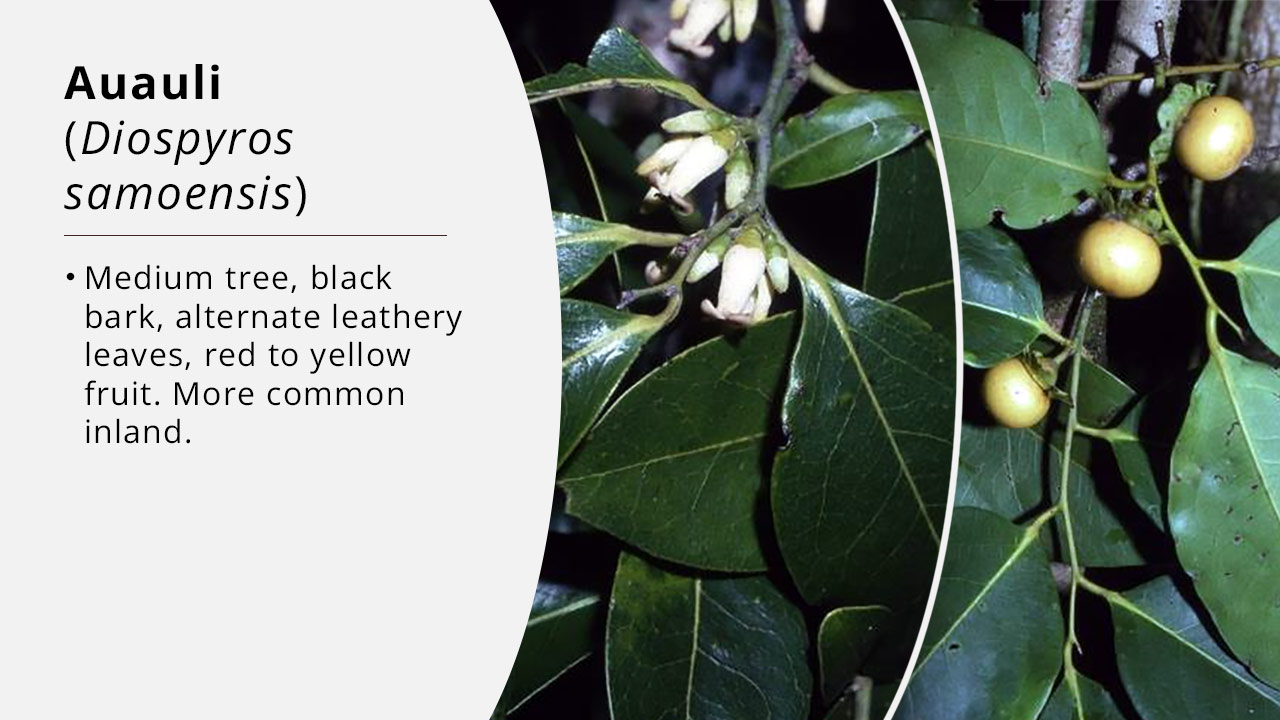
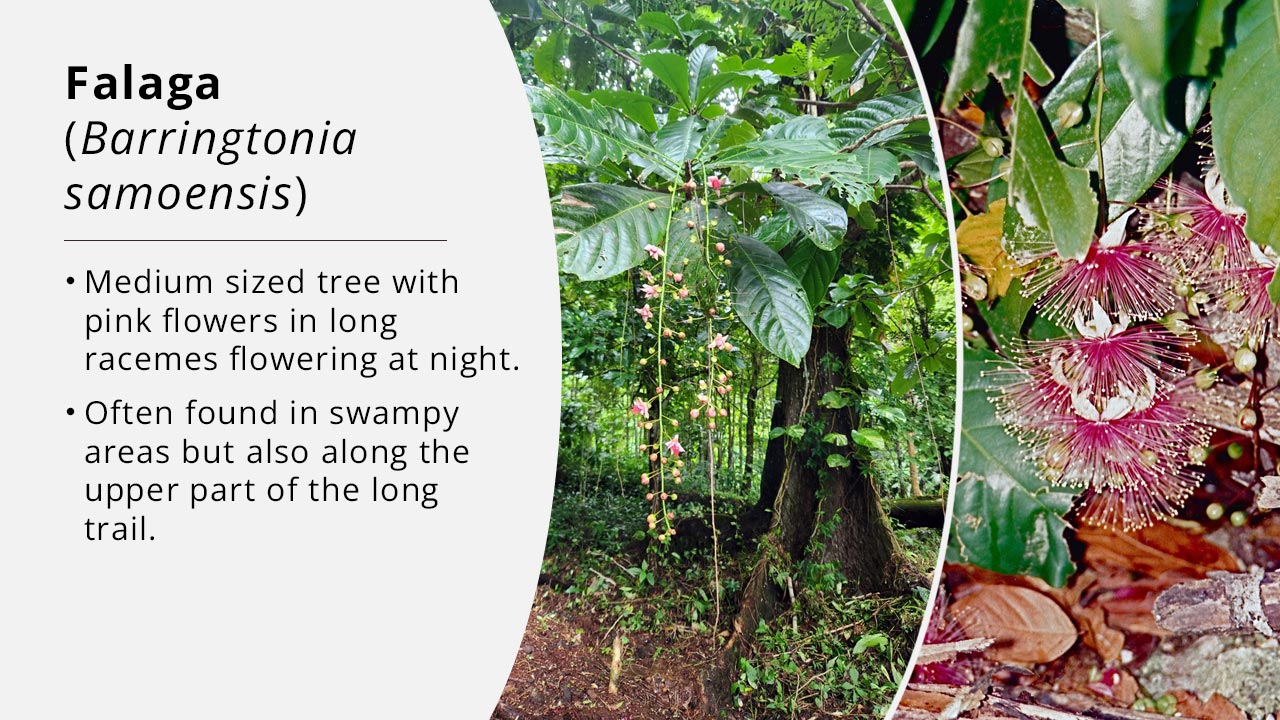
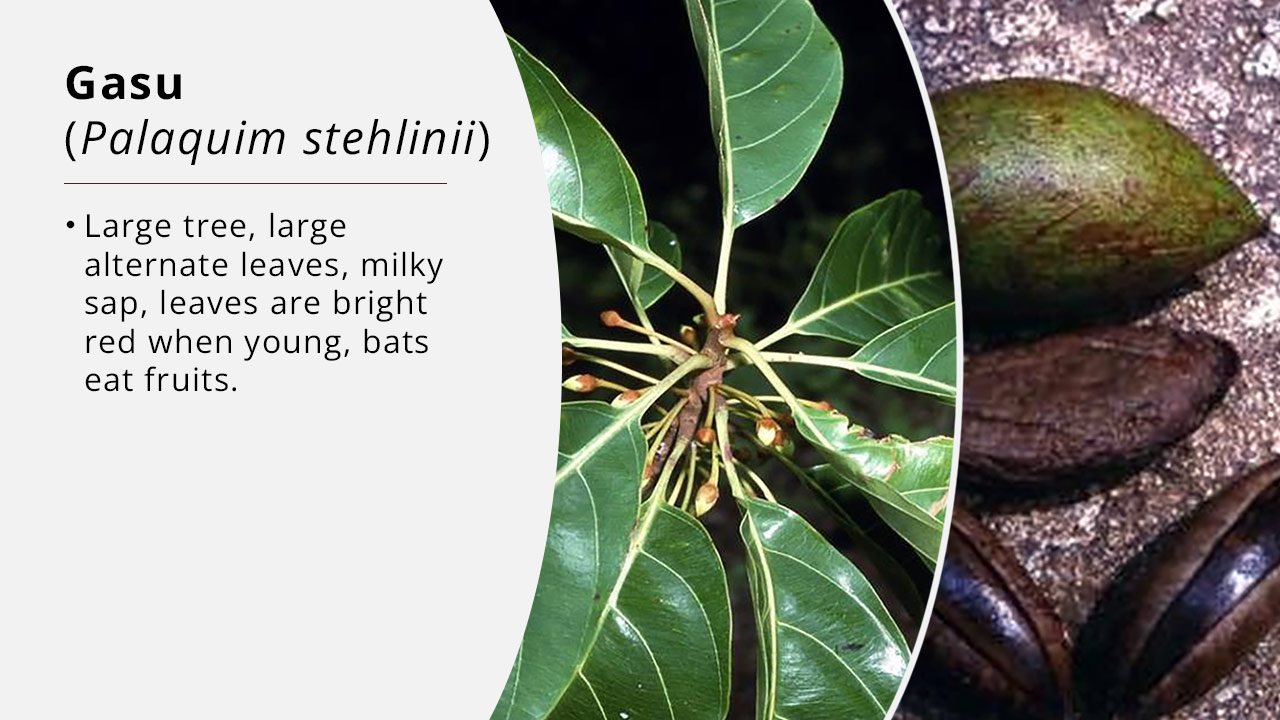
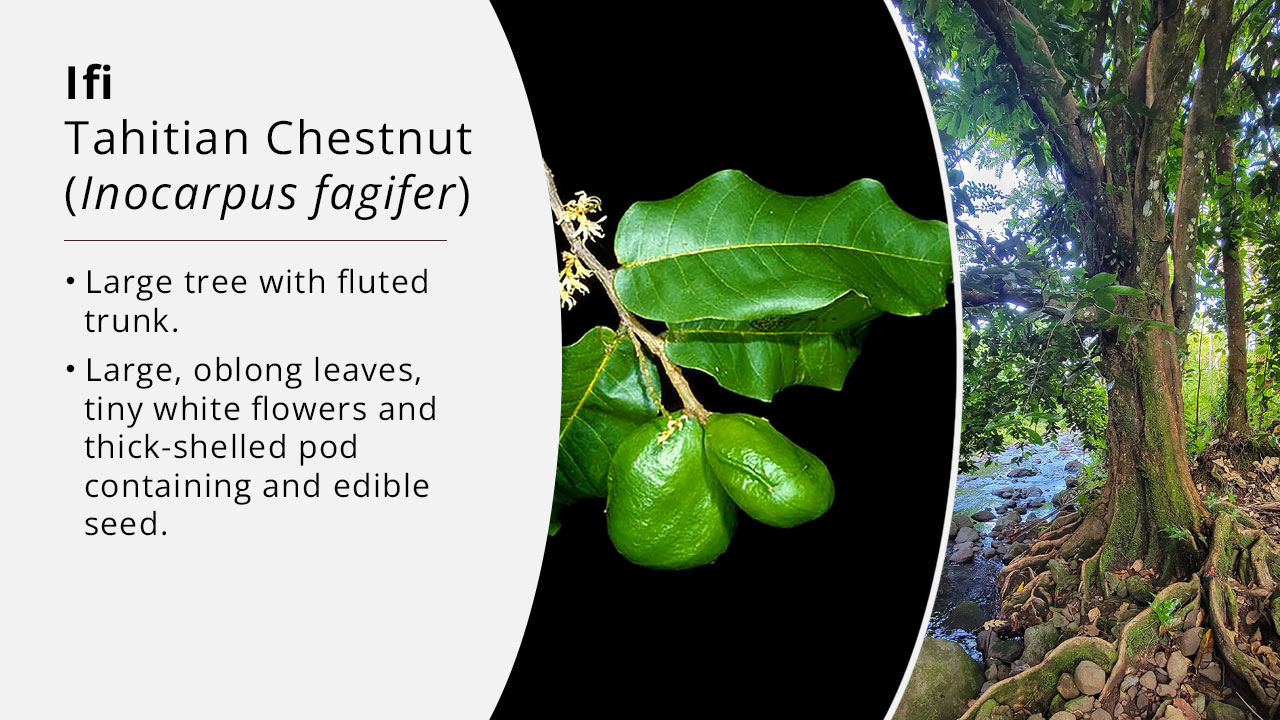
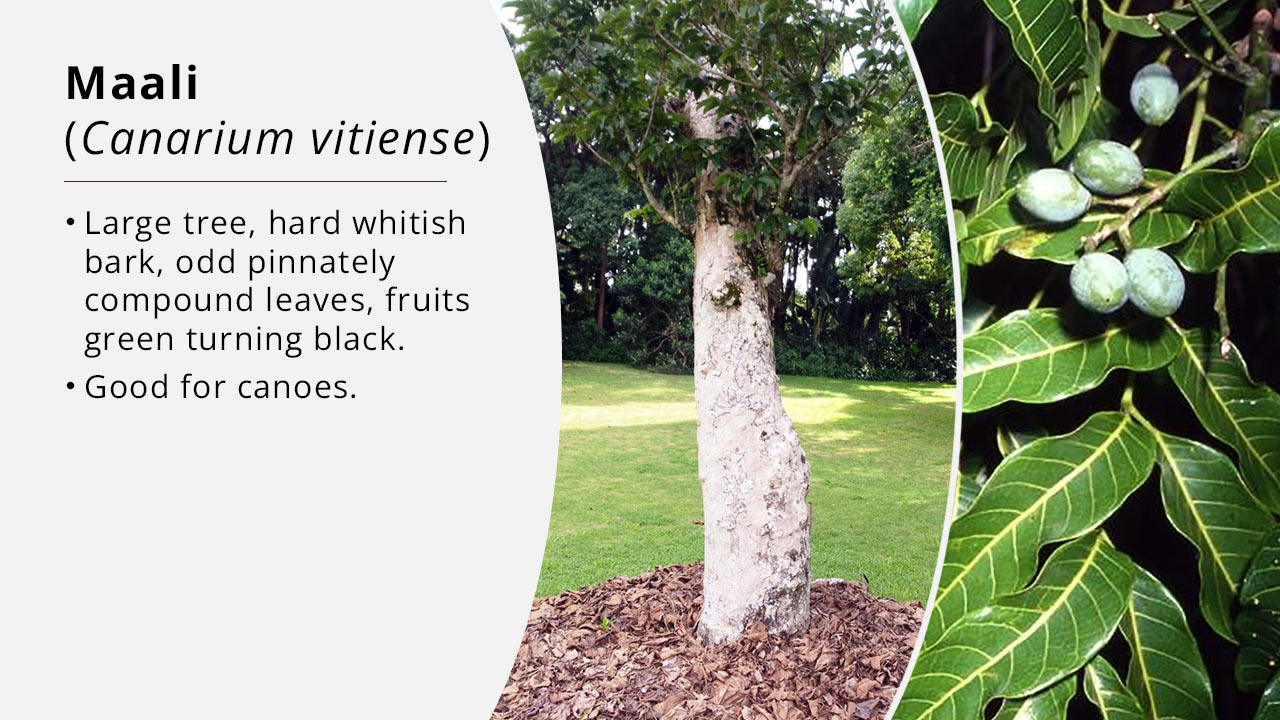
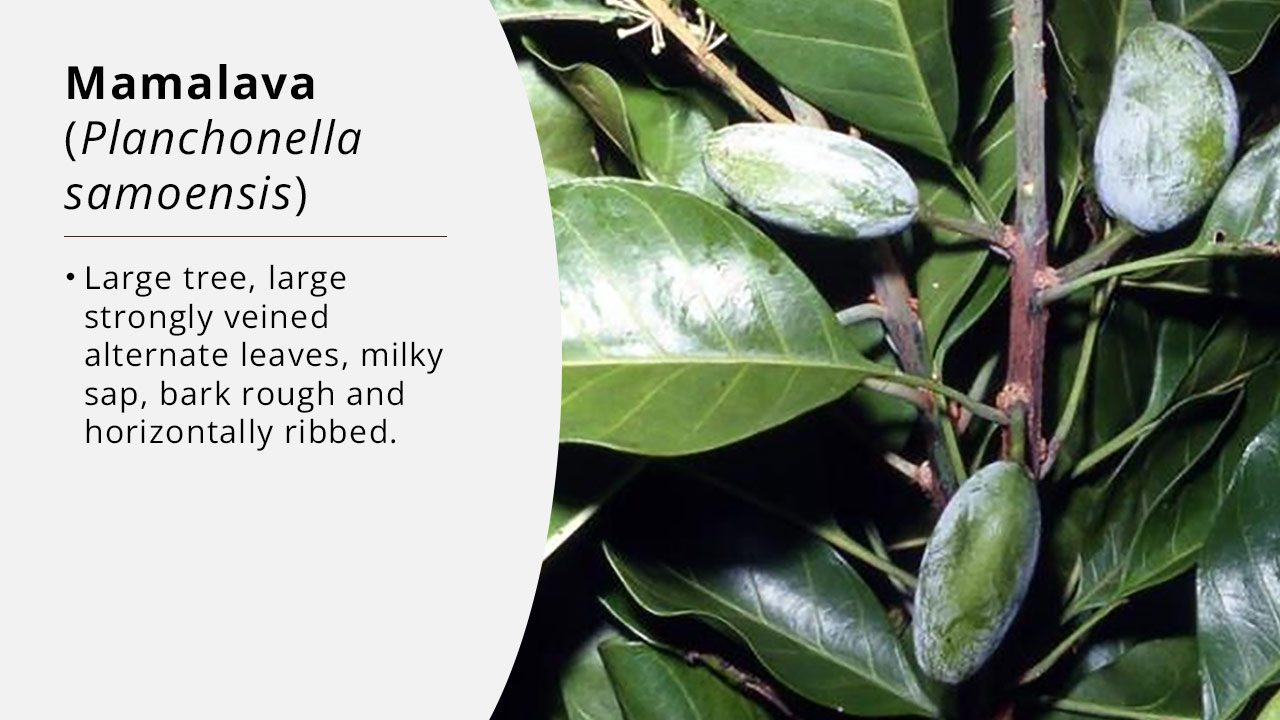
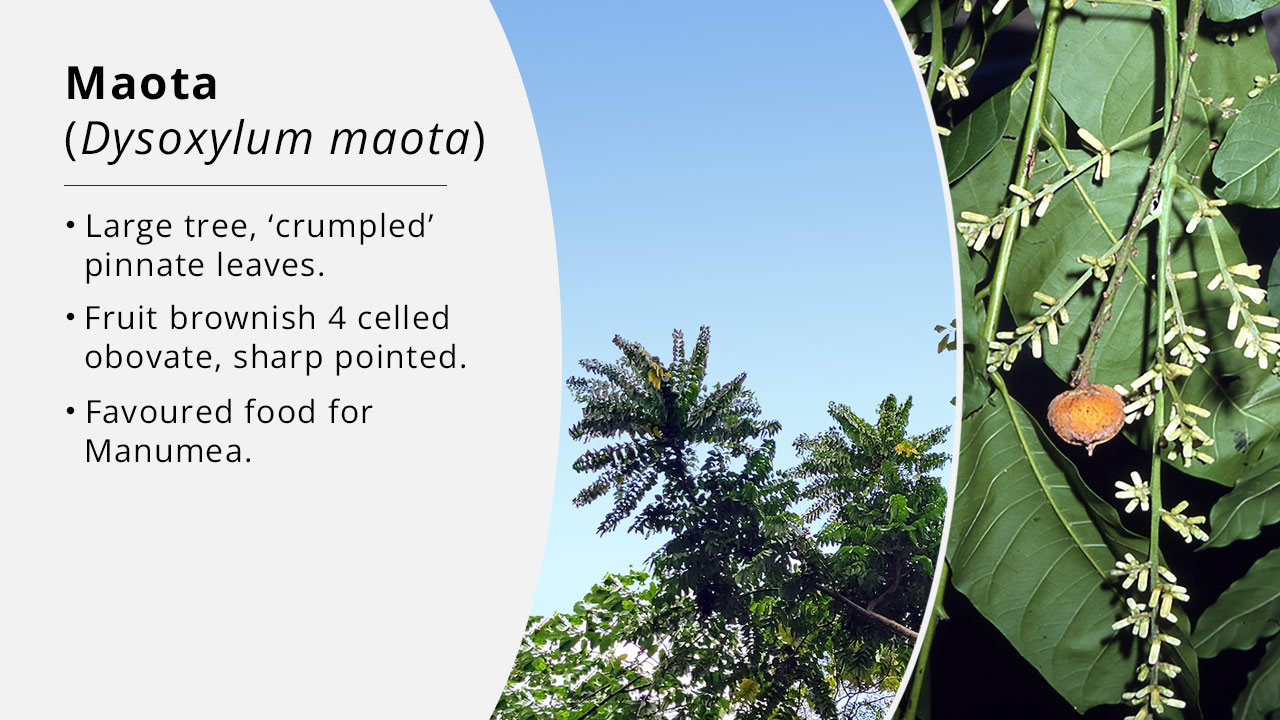
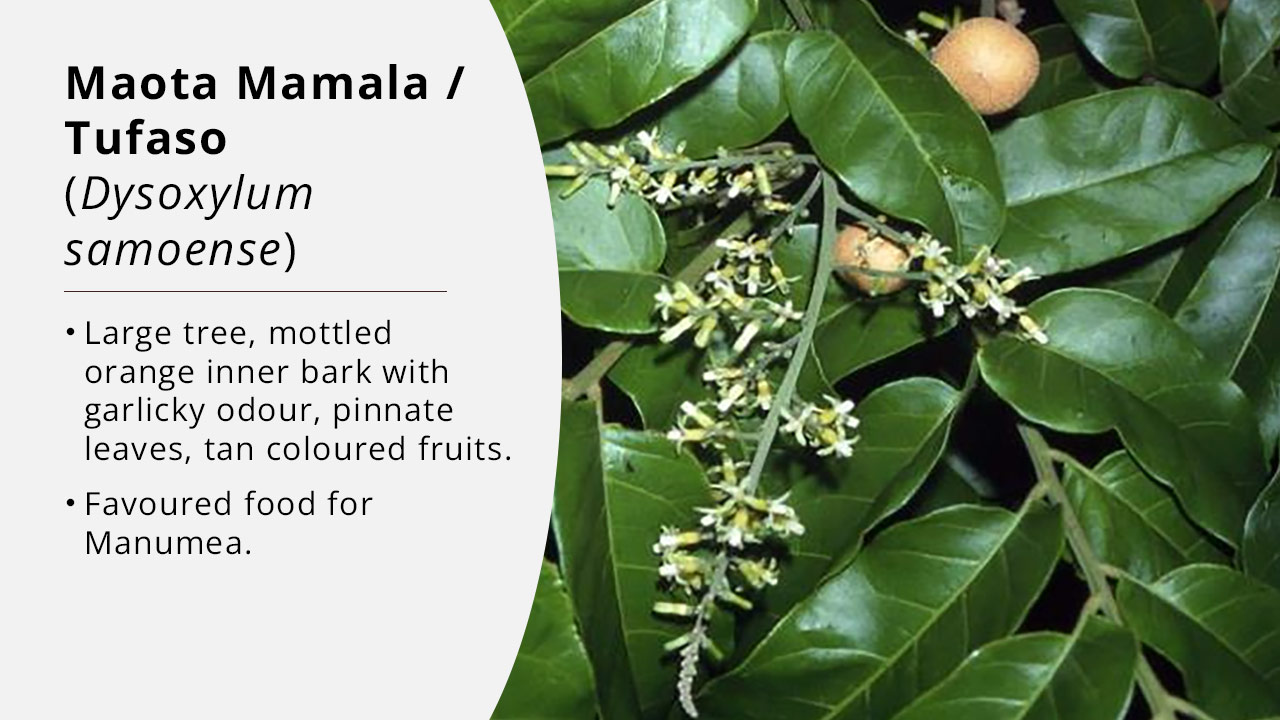
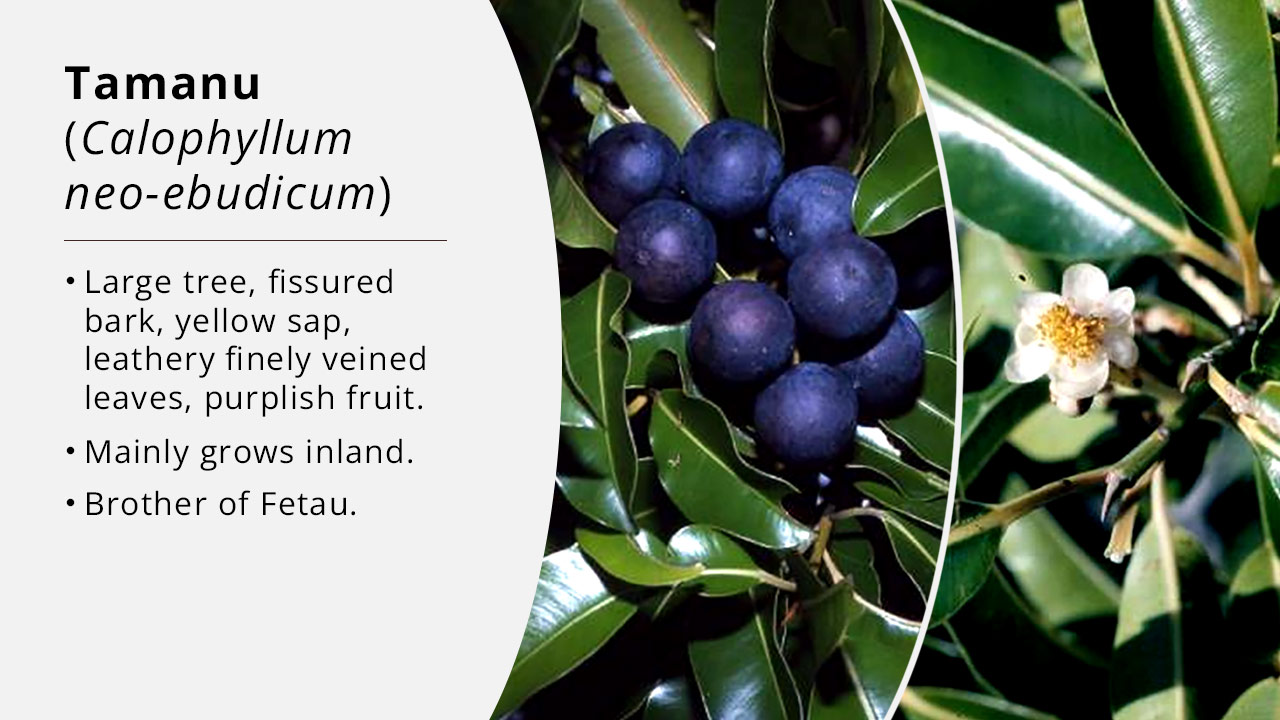
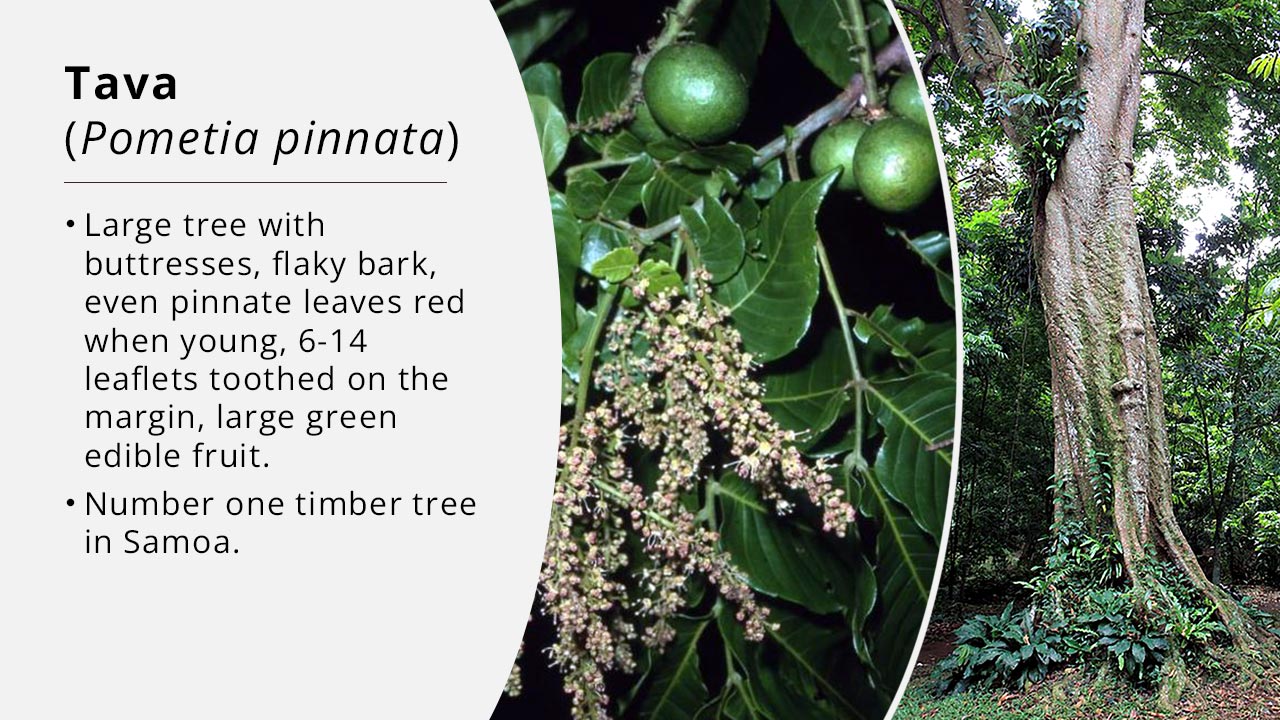
Along the long trail are some large native trees including Tava (Pometia pinnata), Ma’ali (Canarium vitiense), Gasu (Palaquium stehlinii), Mamalava (Planchonella samoensis), Asi Toa (Syzygium inophylloides), Ifi (Inocarpus fagifer), Maota (Dysoxylum maota) and Maota Mamala (Dysoxylum samoense). Common sub canopy trees include Falaga (Barringtonia samoensis) and Atone (Myristica inutilis). The less common native trees include: Ala’a (Planchonella garberi), Tamanu (Calophyllum neo-ebudicum), and Au’auli (Diospyros samoensis). Also look out for the giant Aoa, or Banyan Trees (Ficus prolixa and Ficus obliqua).
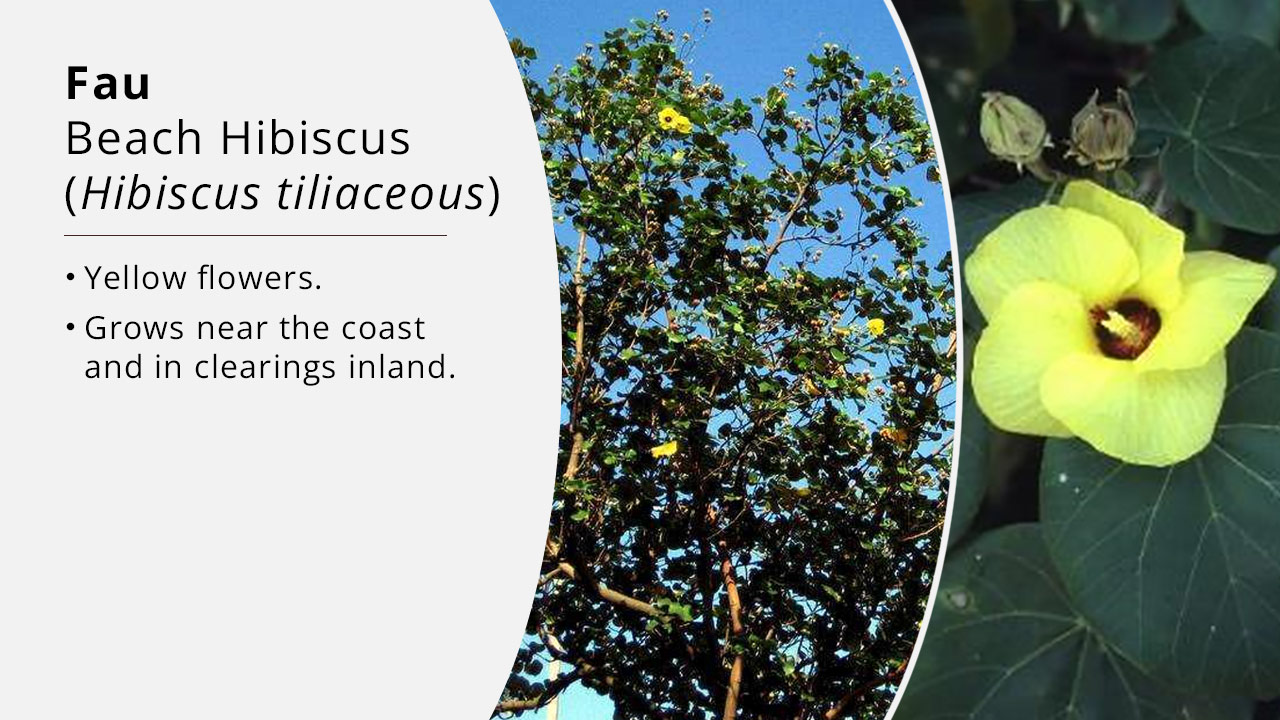
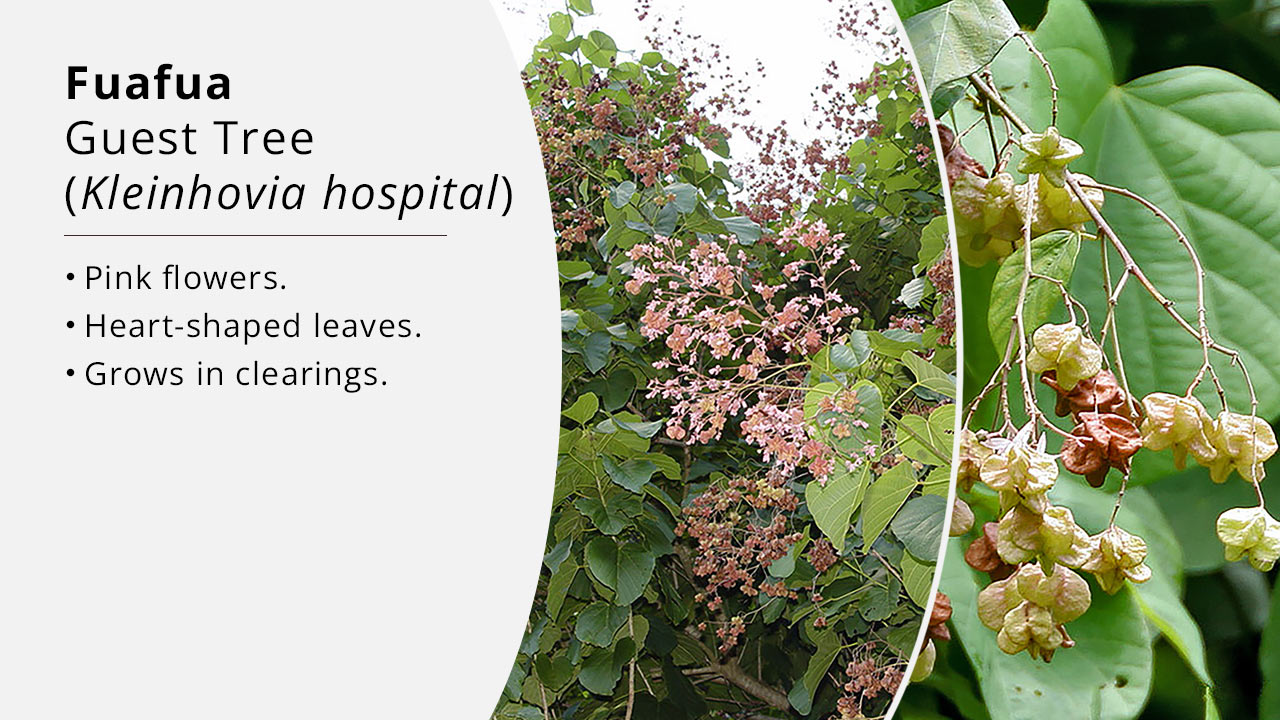
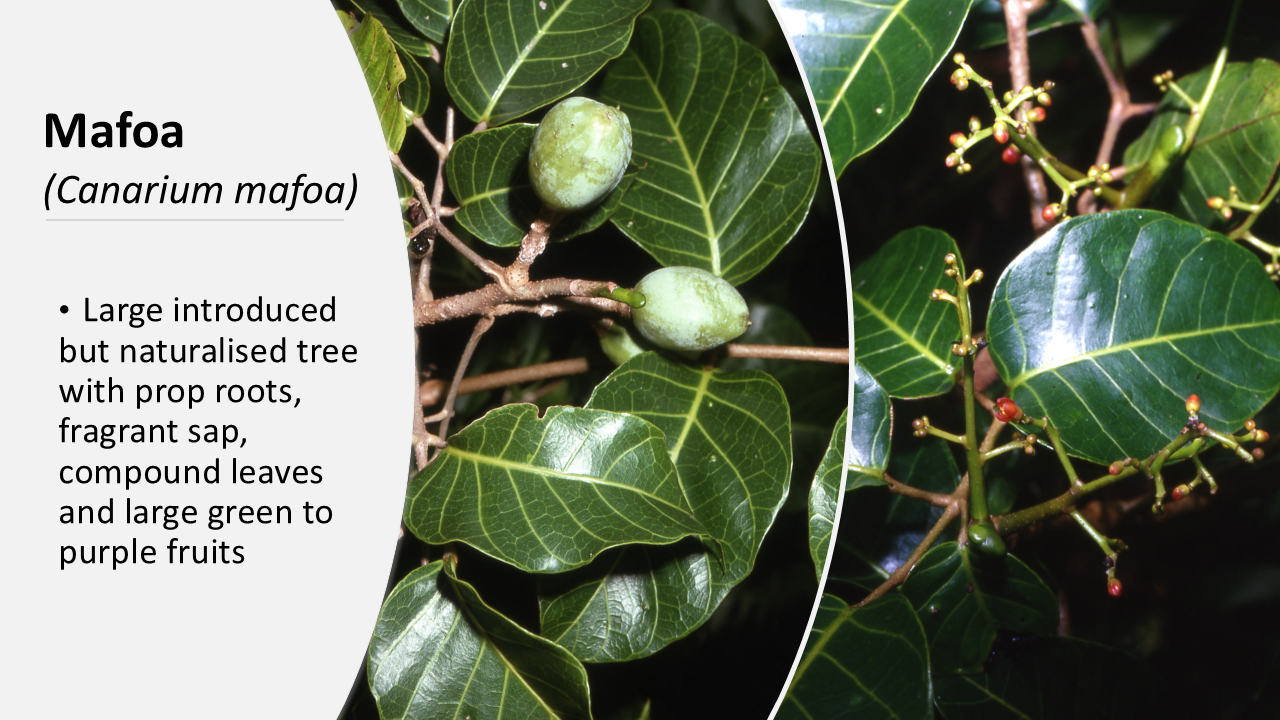
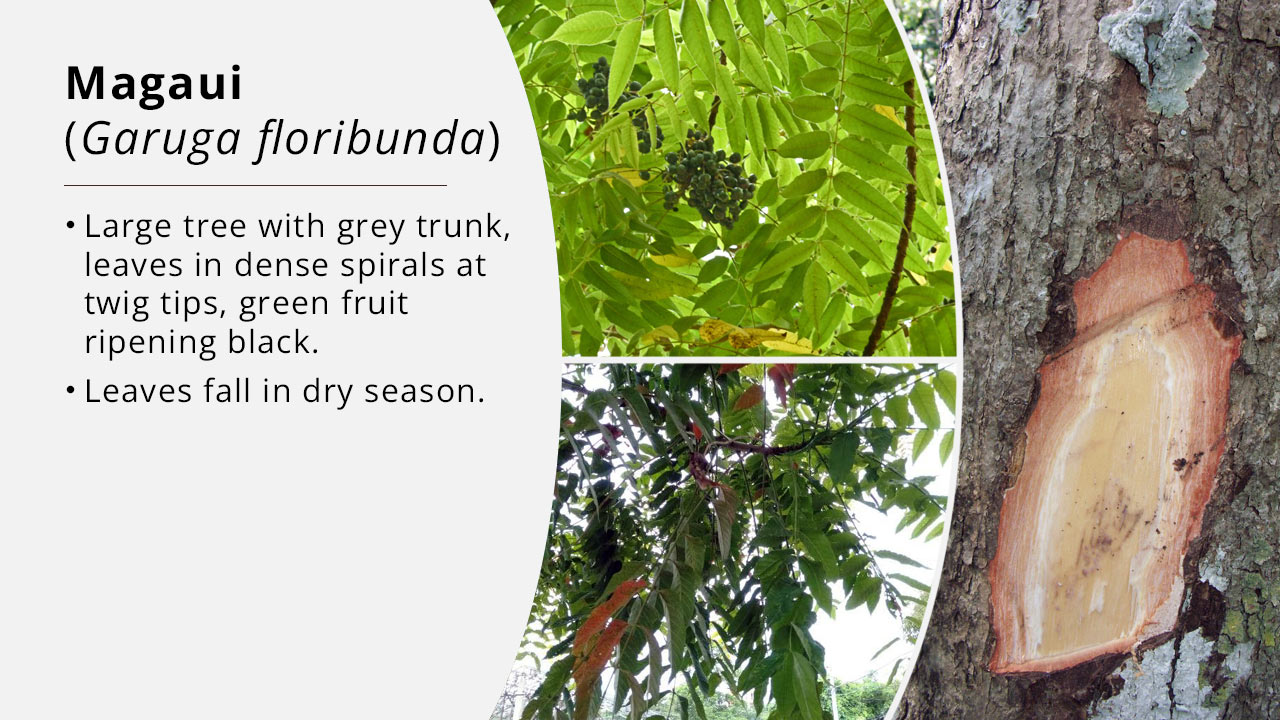
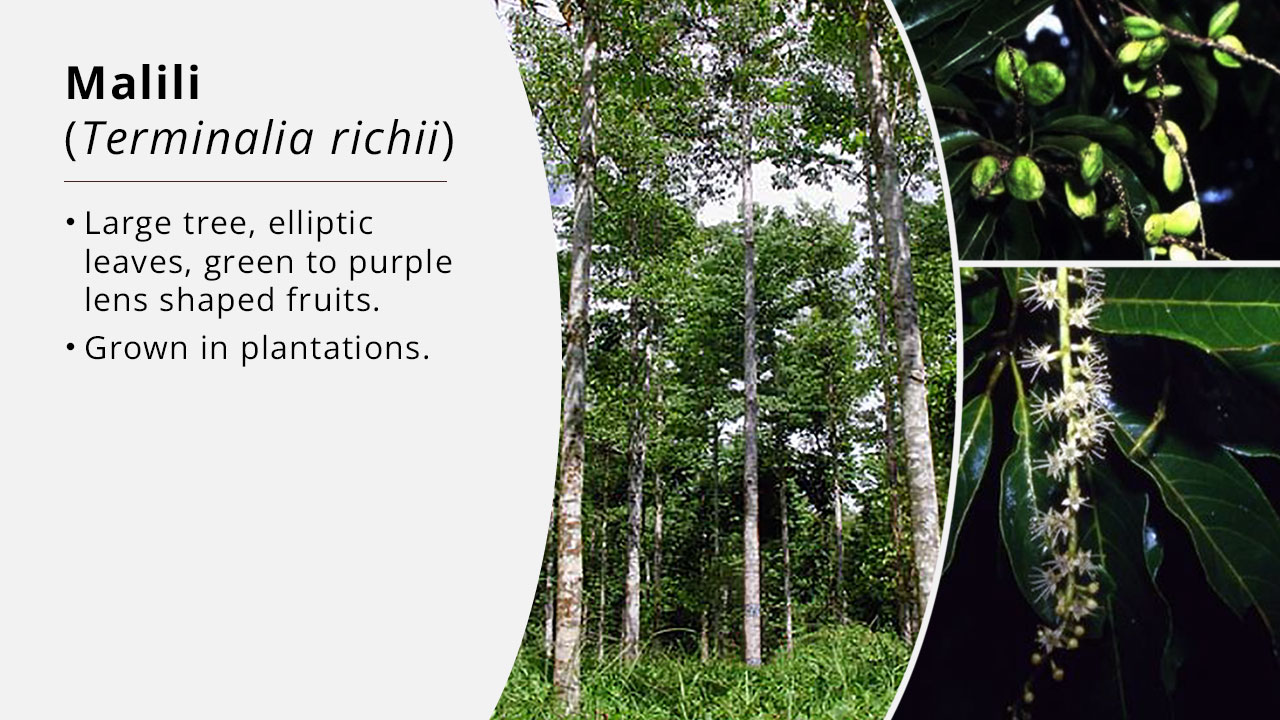
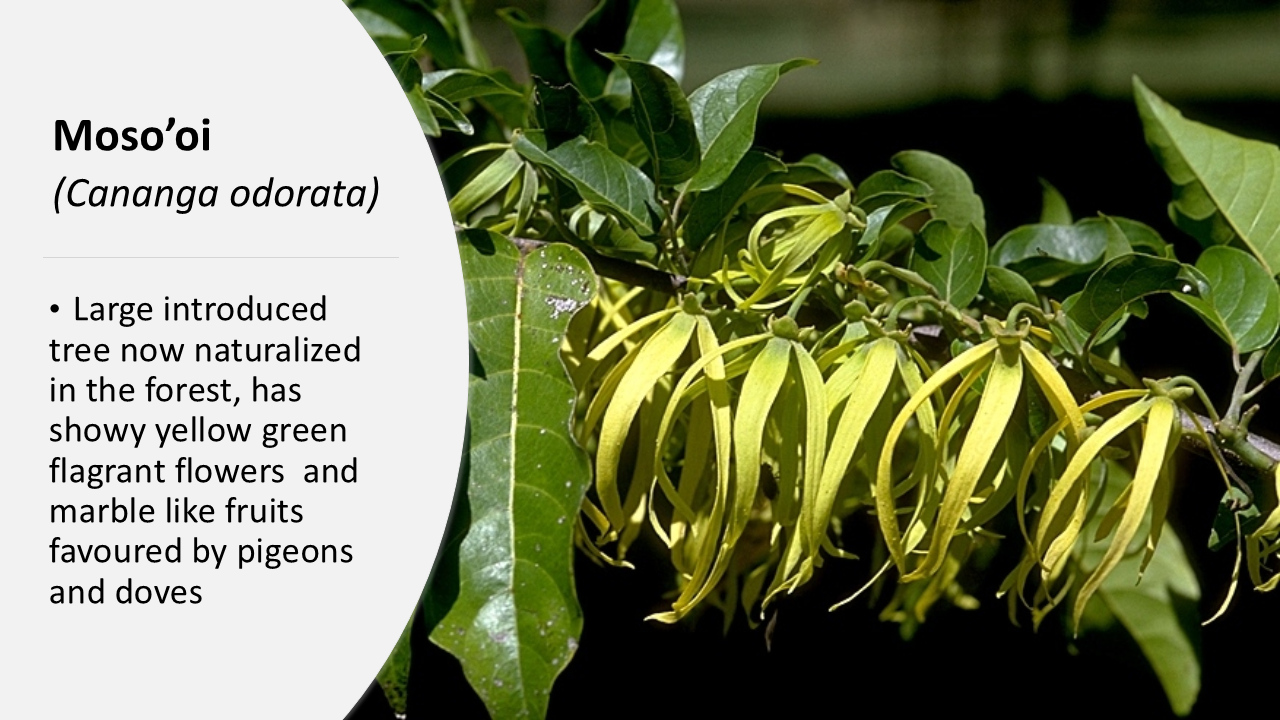
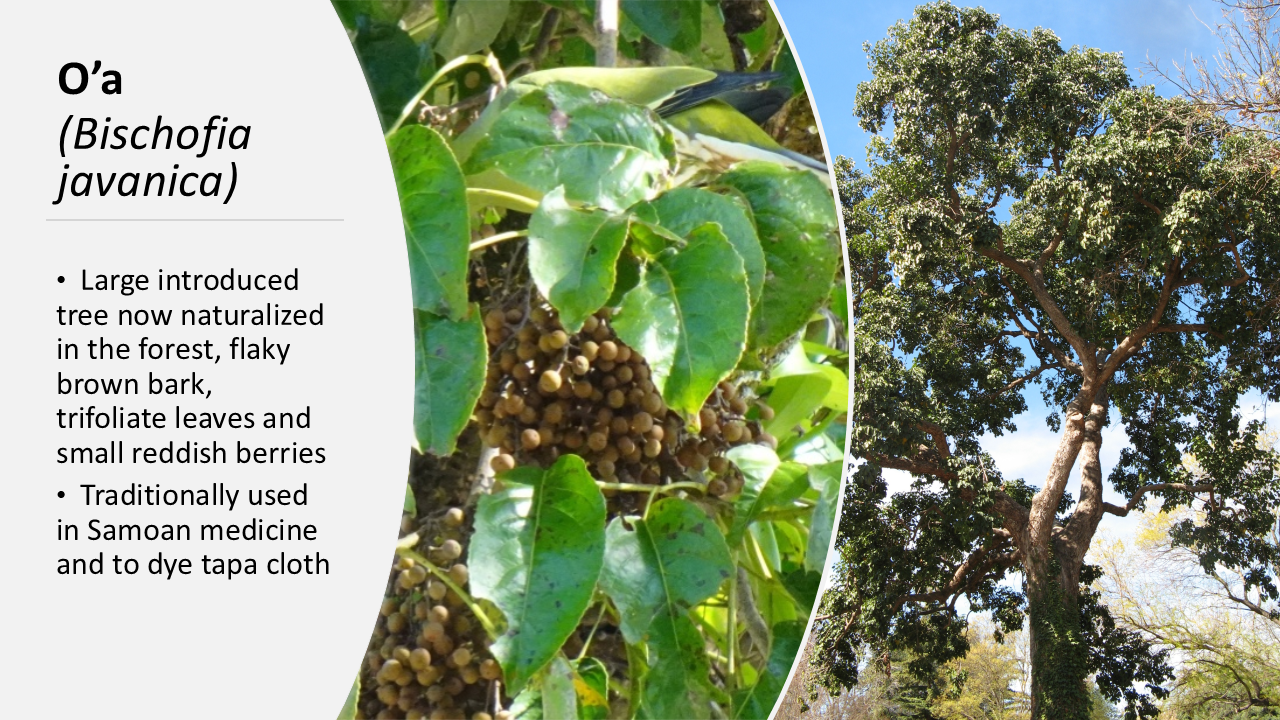
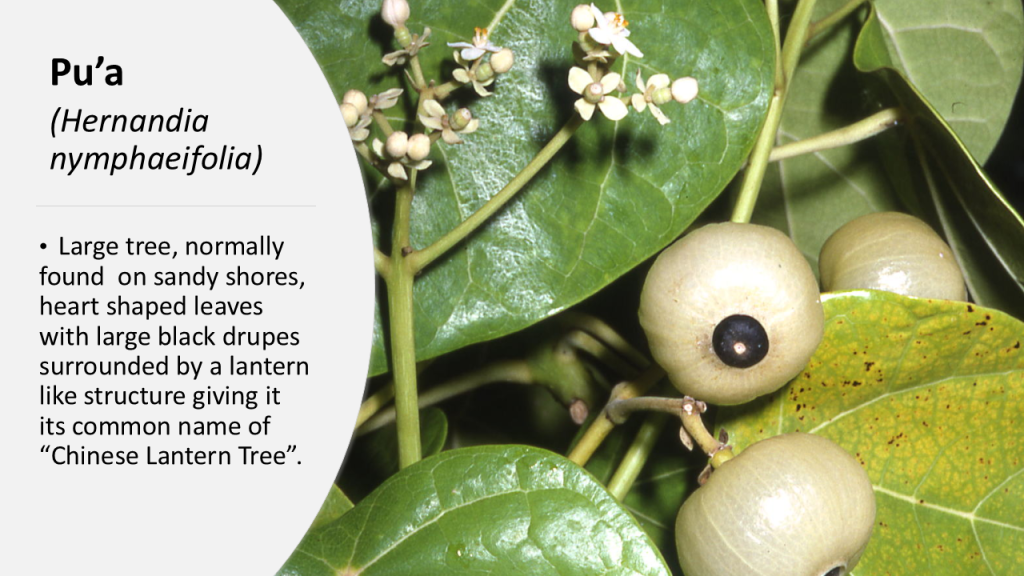
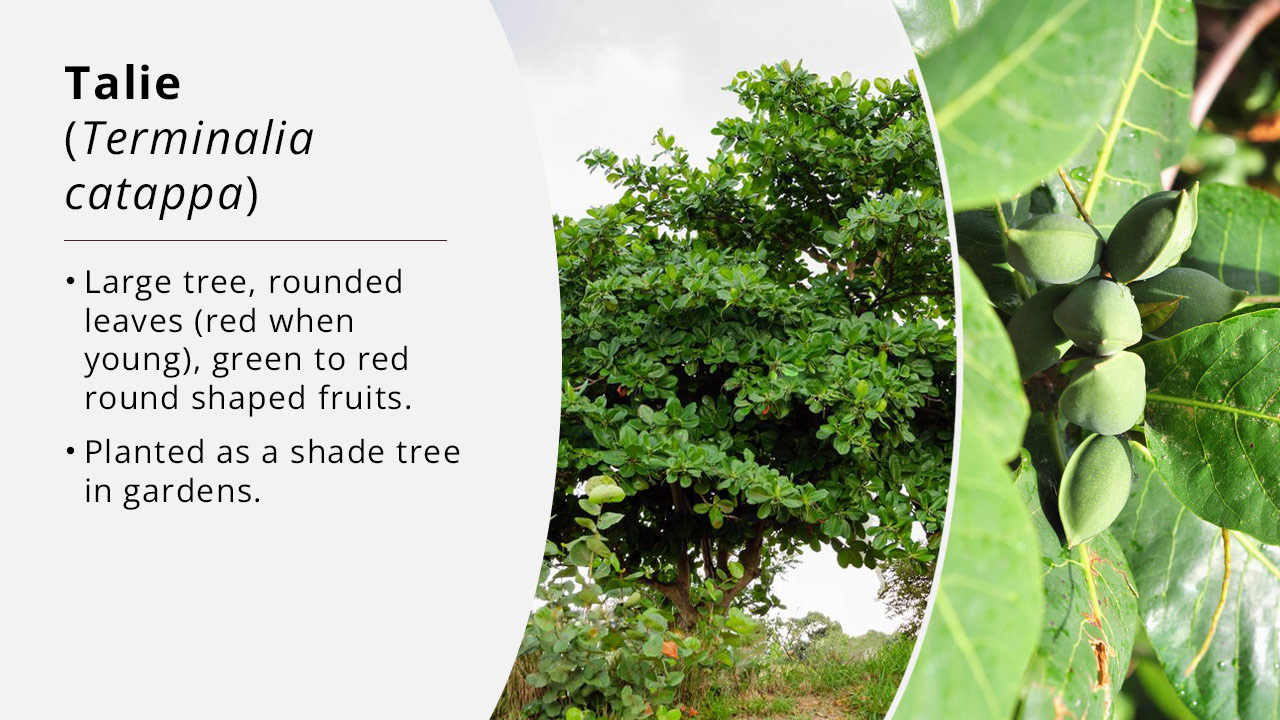
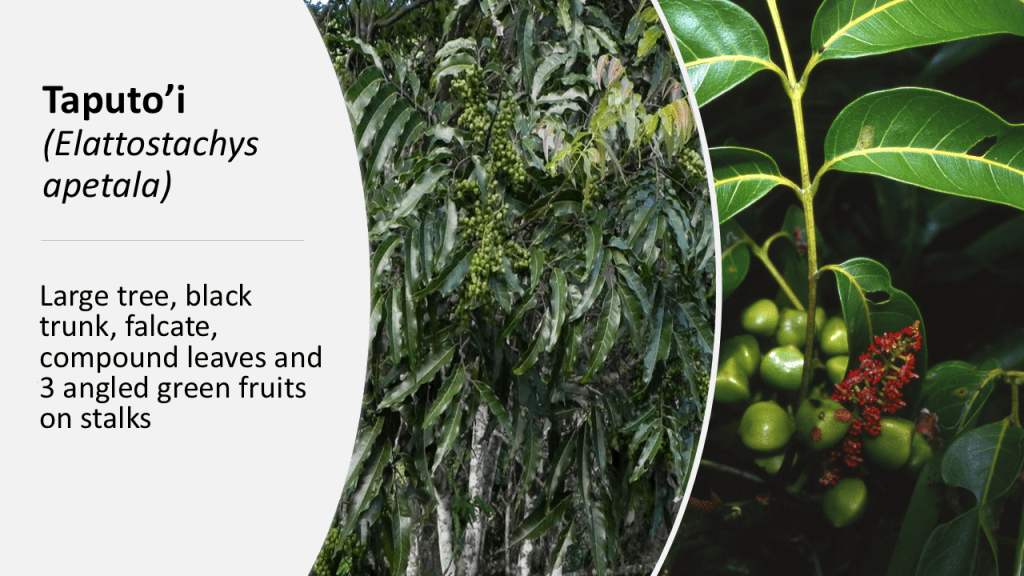
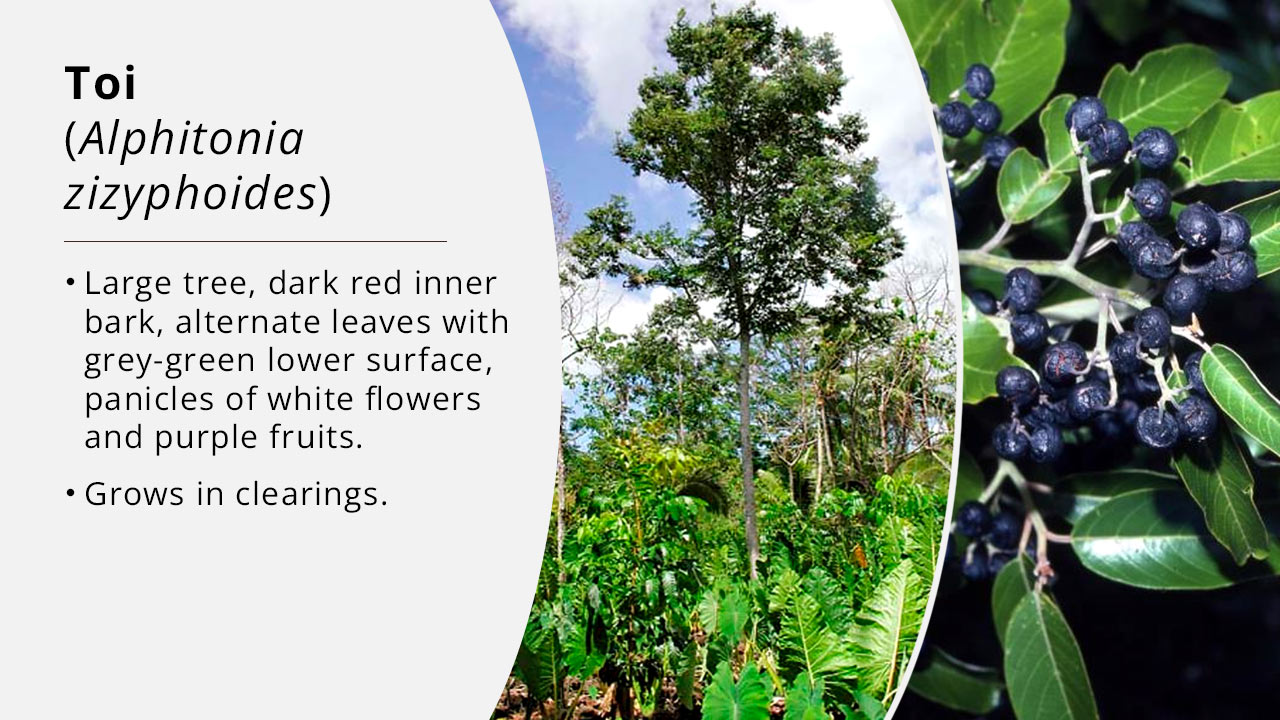
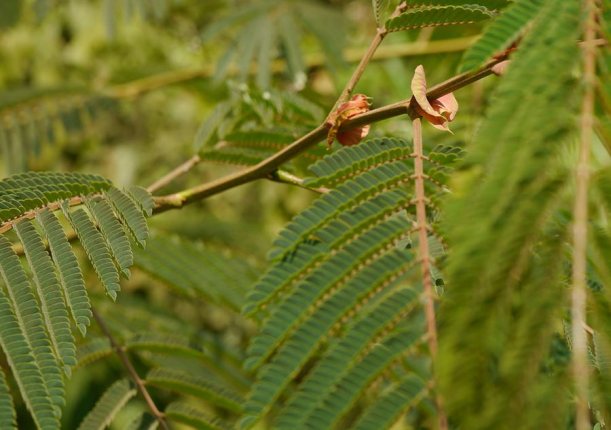
Here are some photos and descriptions of some of the dominant native and naturalised trees found in the reserve.

 samoaconservationsociety.com