
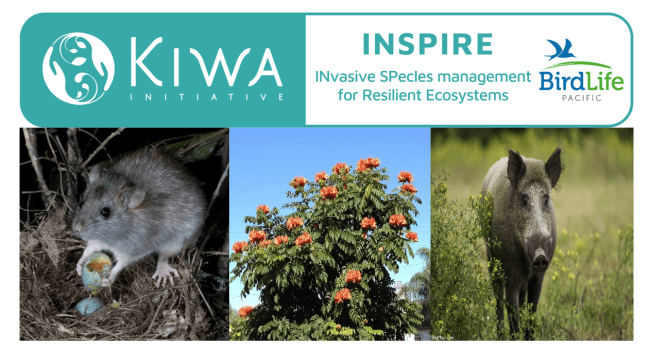
INvasive SPecIes Management for Resilient Ecosystems and Communities.
The INSPIRE Project is a groundbreaking initiative aimed at reducing the impacts of invasive species across the Pacific Islands, enhancing both ecosystem resilience and community well-being in the face of climate change. Funded through the Kiwa Initiative, which supports climate resilience efforts across the Pacific, INSPIRE is led by BirdLife International and focuses on integrating nature-based solutions into invasive species management across five high-priority biodiversity sites.
Project Sites:
- Gasegase Catchment, Samoa
- Navukailagi Catchment, Gau Island, Fiji
- Omao Catchment, Fatu Hiva, French Polynesia
- Rock Island Southern Lagoon (RISL), Palau
- Kayangel Atoll, Palau
These sites were selected due to their rich biodiversity and the urgent need to mitigate the impacts of invasive species, which pose significant threats to both native species and local livelihoods.
Project Objectives and Components
The INSPIRE project is structured around three core components, each designed to strengthen invasive species management and ecosystem resilience:
Component 1: Implementing Solutions
Invasive species, such as rats, have caused severe ecological damage on islands. This component will address the impacts of invasive species on livelihoods and ecosystems and their resilience to climate change.
Component 2: Learning
This component will consist of establishing Ecosystem Resilience Learning Networks (ERLN) at a national level in each of the four project countries, as well as at a regional level. The regional level ERLN will include stakeholders of the four national ERLNs and will integrate stakeholders from other Pacific countries and territories (with an emphasis on BirdLife Partners operating in those PICTs).
Component 3: Influencing
INSPIRE activities will contribute to influencing the development of key strategies, policies, and emerging opportunities to integrate and mainstream nature-based invasive species management solutions for climate change adaptation. This will be achieved through working closely with national governments, BirdLife’s participation in various policy working groups at a national and a regional level, and the development of case studies (some of which will be based on the demonstration sites implemented in component 1) to build an evidence base and support the influencing process, and the training and coaching of BirdLife partners on policy influencing. The Pacific has a strong culture of consultation and listening to communities and values collaboration. Policy reviewing or development processes will, therefore, be ideal opportunities for BirdLife to make concrete policy input propositions.
Why Address Invasive Species?
Pacific Islands have faced disproportionate harm from invasive species, contributing to habitat degradation, ecosystem collapse, and even species extinction. These impacts threaten biodiversity, food security, water quality, and local livelihoods – challenges further intensified by climate change. Invasive species can reduce ecosystem complexity, making habitats more vulnerable to climate-related stressors. By controlling invasive species, INSPIRE helps Pacific communities bolster ecosystem resilience, promote biodiversity, and reduce climate vulnerabilities.
INSPIRE in Samoa
The Samoa Conservation Society will be frontlining the INSPIRE Project here in Samoa. The site, Gasegase Catchment, was selected because… invasive species found in Samoa…. Loto is heading this project

About the Kiwa Initiative
Announced at the 2017 One Planet Summit, the Kiwa Initiative supports climate adaptation projects across the Pacific, funded by international donors, including Australia, Canada, France, New Zealand, and the European Union. The Initiative enhances access to funding for climate adaptation through nature-based solutions, helping local authorities and civil society organisations develop resilience-building programs that are gender-sensitive, inclusive, and rooted in human well-being and biodiversity.
 samoaconservationsociety.com